


A grain-free label alone won’t solve itchy skin. The best food for Cocker Spaniel skin problems is a complete, balanced food that suits your dog’s needs, but diet may be only part of the picture. Floppy ears and a tendency towards skin conditions can also make Cocker Spaniels vulnerable to ear and skin problems. Excess oil in the ear canals may contribute to inflammation.
It’s understandable to look first at the food bowl when scratching, sore ears or a dull coat keep returning. A carefully chosen diet, including one with fish and omega-3 fatty acids, may support skin health, while food sensitivities are just one possible cause; environmental allergies and other skin conditions can matter too. This guide explores four factors to consider: how diet relates to ear infections, why the breed can be prone to itchy skin, what omega-3s may contribute, and how food allergies differ from environmental allergies. You’ll also see why persistent or changing symptoms deserve attention rather than a food change alone.
Key Takeaways
- Recurring ear trouble can have several contributing factors, so consider diet alongside ear health and skin symptoms.
- Look at the whole diet: nutrients such as fish oil, flaxseed and zinc can support healthy skin and coat.
- Omega-3s may help with inflammation; note changes in scratching and coat condition when assessing a dietary change.
- Food and environmental allergies are different possibilities. Keeping a record of symptoms can help make patterns easier to spot.
1. Can diet help reduce ear infections in Cocker Spaniels?
Cocker Spaniels are prone to ear trouble partly because floppy ears reduce airflow around the ear canal. Glands in the ear canal can produce excess oil, and inflammation may develop rapidly. Warm, irritated skin can also allow Malassezia yeast to overgrow, particularly when another skin condition is present. Recurring infections can therefore have several causes: oily canals alone don’t show that food is responsible.
Food may be relevant if a sensitivity contributes to itchy or inflamed skin. A hypoallergenic fish-based food is one dietary approach sometimes considered for recurring yeast-related ear problems. However, changing kibble won’t clear an active infection or identify every cause. Skin disease, yeast and bacteria can overlap, so note ear symptoms alongside other signs such as paw licking, body scratching or coat changes.
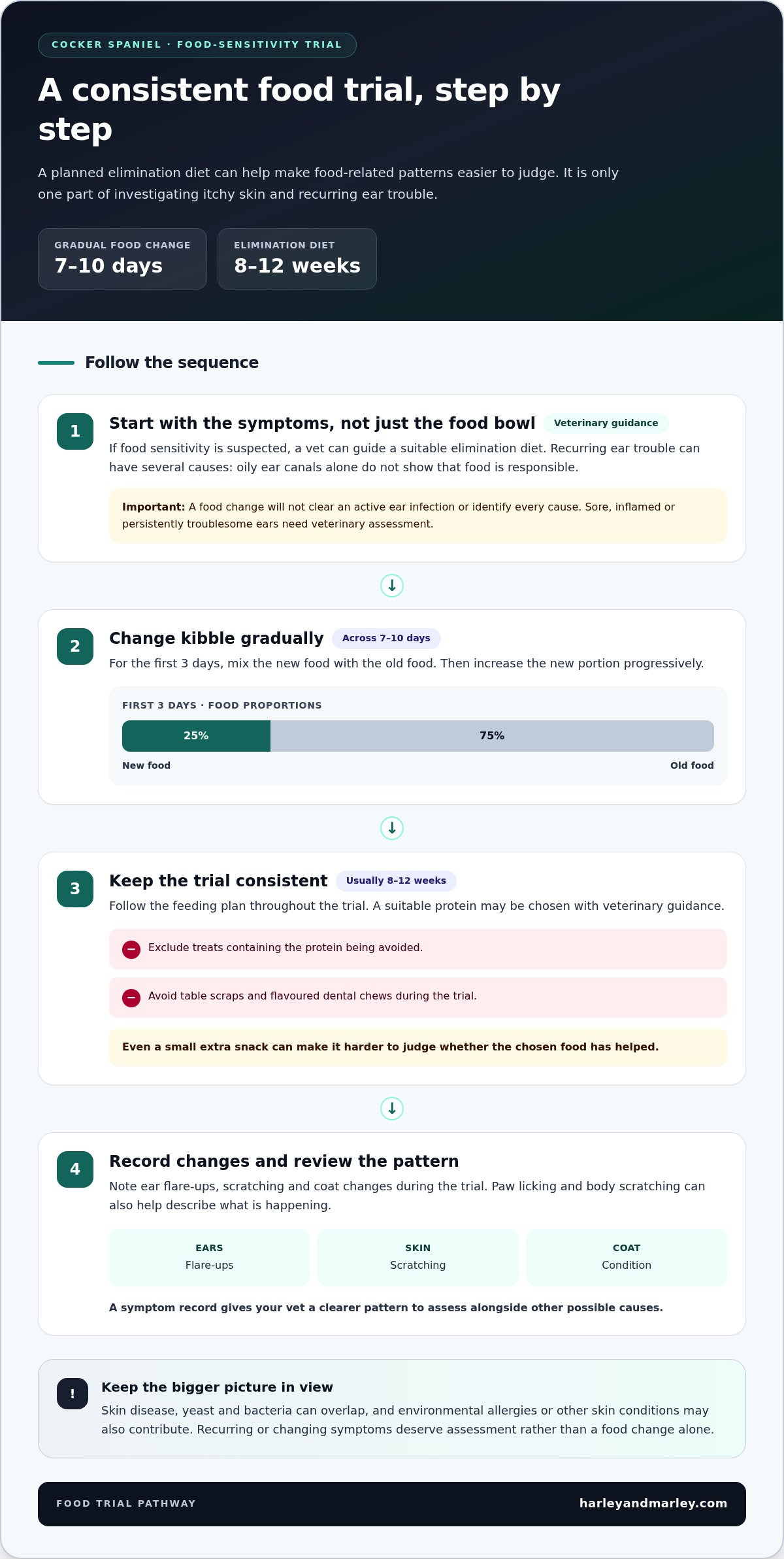
If a food sensitivity is suspected, an elimination diet usually runs for 8 to 12 weeks. Keep the feeding plan consistent throughout the trial, excluding treats containing the protein being avoided, table scraps and flavoured dental chews. Even a small extra snack can make it harder to judge whether the chosen food has helped. Record ear flare-ups, scratching and coat changes, then share that pattern with your veterinarian.
Change kibble gradually over seven to ten days to help your Cocker Spaniel adjust. For the first three days, use 25% new food and 75% old food, then increase the new portion progressively. Don’t treat recurring ear infections as a diet-only problem: a veterinarian should assess skin or ear changes, even when they seem minor, and diagnose and treat underlying causes early and completely. Seek advice promptly if your dog’s ears become inflamed, sore or persistently troublesome.
2. Why are Cocker Spaniels so prone to itchy skin?
Cocker Spaniels can develop itchy skin for several reasons, not all of them linked to food. The breed is predisposed to hypothyroidism, which can contribute to inflamed skin, hair loss and ear infections. Problems can overlap: once the skin barrier is damaged, bacteria, Malassezia yeast or parasites may add further irritation. A food change alone won’t address every cause.
Balanced nutrition supports skin renewal and coat condition. Flaxseed, fish oil and zinc are nutrients associated with healthy skin and a glossy coat. Choose a complete food appropriate for your dog’s life stage, then adjust portions for activity, lifestyle and body condition, rather than weight alone. An active Cocker Spaniel may have different energy needs from a less active companion, but extra food won’t correct an underlying skin disorder.
Hypoallergenic and sensitive-skin foods in Ireland don’t have one fixed price; cost varies with pack size and formulation. The best food for a Cocker Spaniel with skin problems is a complete, balanced option suited to their needs. If food sensitivity is suspected, a vet can guide a suitable elimination diet using a protein such as salmon, lamb, duck or venison.
Changing food without veterinary advice can make symptoms harder to interpret, particularly if several ingredients or treats change at once. It may also delay attention to conditions such as hypothyroidism or infection, which require the underlying cause to be addressed. Introduce new food gradually and keep other feeding consistent during any planned trial.
Keep a simple daily note of scratching, coat condition, ear health and stool quality. Record changes after food adjustments, including whether your dog remains active and comfortable. Arrange a veterinary assessment for itchy skin, hair loss, inflamed areas, sores or recurring ear problems, even if the signs seem mild at first. Early diagnosis can help distinguish nutritional sensitivities from other causes.
3. Omega-3 fatty acids and inflammation
Omega-3 fatty acids can be relevant when a Cocker Spaniel has itchy skin linked with inflammation. A study reported measurable reductions in pruritus scores in dogs with atopic dermatitis after 12 weeks of omega-3 supplementation. Pruritus means itching, so tracking scratching can help you notice whether symptoms change over time. This finding relates to dogs with atopic dermatitis; it doesn’t establish omega-3s as a treatment for every cause of itching.
Omega-3 and omega-6 fatty acids both belong in a dog’s diet. They have different roles in the body, including supporting skin function, and the overall nutritional balance matters more than focusing on one ingredient in isolation. A complete food supplies nutrients together, while an added oil changes the diet’s composition. Check the feeding guidance for the food and supplement, rather than adding an arbitrary amount of oil.
Fish oil is one source of omega-3s. Before adding it, consider your dog’s current food, other supplements and any veterinary diet trial. For example, introducing fish oil during an elimination diet can make it harder to identify which ingredients affect symptoms. Keep the protein source and other feeding consistent during a planned trial, and record changes in scratching, coat condition, ears and stools.
Omega-3 supplementation supports nutritional care, but itchy skin can also result from environmental allergies, parasites, infection or another skin condition. If symptoms persist, worsen or occur alongside sore ears or hair loss, arrange a veterinary assessment. A veterinarian can consider the pattern of inflammation, your Cocker Spaniel’s diet and other signs before recommending a suitable plan. Don’t use a supplement as a substitute for investigating ongoing skin problems.
4. Food allergies compared with environmental allergies
Environmental allergies are more common in dogs than food allergies, so an itchy Cocker Spaniel may be reacting to something in their surroundings rather than their food. Both types can cause itching and inflamed skin, and affected dogs may also lick their paws or scratch around the face and ears. A sore ear canal can occur alongside broader skin symptoms, but that sign alone doesn’t identify the trigger.
Food allergies involve a reaction to an ingredient; common triggers include beef, chicken, dairy, wheat and soy. Environmental allergies arise from exposures outside the food bowl. Food intolerance is different: it generally means difficulty digesting an ingredient, rather than an allergic immune response. Digestive symptoms may point towards intolerance, while persistent skin itching can occur with allergies, but symptoms overlap and aren’t a diagnosis.
To investigate a dietary trigger, a vet-guided elimination diet removes suspected ingredients and avoids extras that could undermine the trial. Check treats, table scraps and flavoured dental chews, not just the main food. A novel-protein or limited-ingredient diet may help manage food sensitivities. Keep feeding consistent and record itching, ear changes and stool quality to make the pattern easier to review.
Veterinary hydrolysed-protein diets can support an elimination trial for suspected food allergy. Their proteins are broken into smaller components to help reduce recognition by the immune system, but these diets won’t address environmental triggers. Follow the prescribed feeding plan closely, since additional foods can make the results difficult to interpret.
Changing food repeatedly without a clear plan can obscure which ingredients affect symptoms and may delay assessment of other causes. Monitor portions and weight gain as well as skin changes, because treats and dietary swaps can alter total intake. If itching persists, skin becomes inflamed, or ear problems recur, arrange a veterinary assessment. For a consistent fish-based feeding option, explore fish-based dog food as part of your wider dietary considerations.
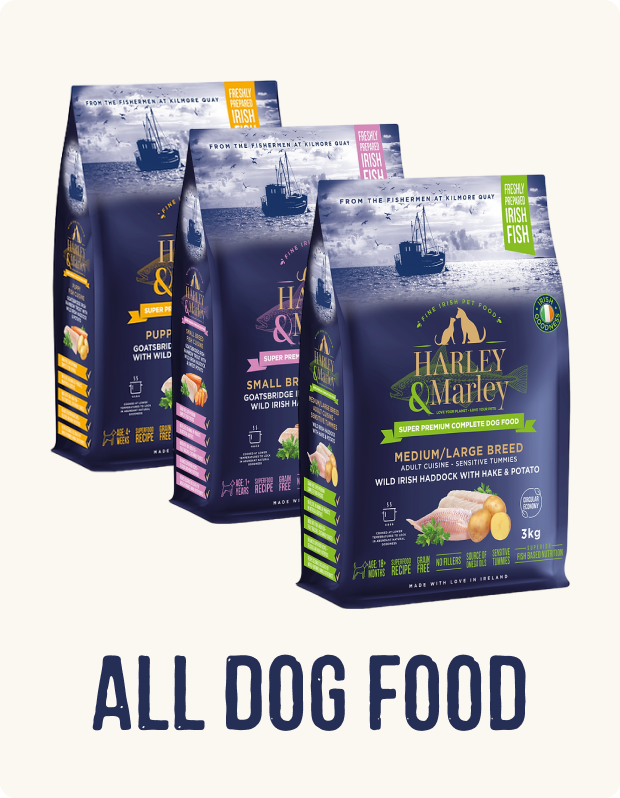
Harley & Marley: Medium/Large Breed Complete Food
Harley & Marley’s Medium/Large Breed Complete Food is a fish-based complete-food option for Cocker Spaniels’ everyday feeding. Choose food according to your dog’s life stage and needs, and keep portions suited to their activity and body condition. Harley & Marley also offers Puppy Complete Food, Small Breed Complete Food and Senior Dog Complete Food for different life stages and breed categories.
Complete food can support daily nutrition, but it isn’t a treatment for an allergy, yeast overgrowth or another cause of itchy skin. If your Cocker Spaniel needs a veterinary-directed elimination or hydrolysed-protein diet, follow that plan rather than substituting a different food. Persistent itching or ear problems still warrant veterinary assessment.
Visit harleyandmarley.com to explore the food options.
Make your next food choice with confidence
Choosing the best food for Cocker Spaniel skin problems is less about chasing a “skin” label and more about finding a suitable nutritional fit. Before changing meals, decide what you need the food to do: provide everyday complete nutrition or form part of a vet-guided dietary trial. That distinction clarifies your next step and helps avoid changes that complicate assessment.
For everyday feeding, Harley & Marley offers Medium/Large Breed Complete Food, Puppy Complete Food and Small Breed Complete Food. Choose according to your dog’s life stage and size, and keep any veterinary feeding plan separate from routine food choices. If symptoms continue, use your observations to guide a conversation with your vet rather than relying on food alone.
Contact Harley & Marley to discuss its complete food options and take a considered next step for your Cocker Spaniel.
Frequently Asked Questions
Why are Cocker Spaniels so prone to itchy skin?
Cocker Spaniels can be vulnerable to skin problems because causes may overlap, including inherited tendencies and health conditions such as hypothyroidism. During grooming, check the coat for fleas, other parasites, unusual lumps or lesions, and areas of hair loss. Note where itching occurs and when it flares; those details can help a vet assess the pattern.
How long before I see improvement after changing my Cocker Spaniel's food?
Early coat changes may appear four to six weeks after a clean dietary switch, but a food-allergy elimination trial typically lasts 8 to 12 weeks. These are different timeframes: a shinier coat alone doesn’t establish that a suspected food trigger has been identified. Track scratching, coat condition, ear health and stools throughout, and keep treats and other foods consistent during the trial.
Can diet help reduce ear infections in Cocker Spaniels?
A dietary change may help if food sensitivity contributes to skin or ear inflammation. The frequency of recurring ear infections may reduce within a few months after switching to hypoallergenic fish-based food. Diet isn’t a substitute for treating an active infection. If your dog has sore, inflamed or persistently troublesome ears, arrange a veterinary assessment rather than waiting for a food change to work.
How do UK foods compare for Cocker Spaniels?
Compare UK-made and Irish-available foods by their nutritional suitability for your dog, not by country of origin alone. Check whether the food is complete, which life stage it suits, its protein source and feeding guidance. For a Cocker Spaniel with suspected sensitivity, a longer ingredient list isn’t automatically better; consistency matters, especially during a planned dietary trial.
What protein level is right for a Cocker Spaniel?
Adult pet Cocker Spaniels typically do well with food containing 22 to 27% protein on a dry-matter basis. Working Cocker Spaniels may benefit from 28 to 32%, reflecting their greater activity demands. Compare figures on the same dry-matter basis, since moisture affects label percentages. Choose a complete diet that also suits your dog’s lifestyle and body condition.
Which dog food ingredients commonly trigger skin allergies in Cocker Spaniels?
Common food triggers include beef, chicken, dairy, wheat and soy. Dogs can react to ingredients they have eaten regularly, so choosing a familiar or grain-free recipe won’t identify the cause. If you suspect an allergy, record foods and treats, then discuss a structured elimination diet with your vet instead of removing several ingredients at once.