


Chicken is a familiar ingredient in dog food, so some dogs encounter its proteins repeatedly. The answer to why so many dogs are allergic to chicken is that, in affected dogs, the immune system mistakenly treats a chicken protein as harmful; repeated exposure may play a part in sensitisation. Food allergies account for 10% of allergies in dogs, and itching or digestive upset can also have causes other than food.
If your dog is uncomfortable, it’s understandable to wonder whether chicken is to blame. But symptoms alone can’t confirm an allergy, and changing food without a clear plan may make the cause harder to identify.
This guide explains how chicken reactions can develop, why another protein may not automatically be suitable, and how veterinary diagnosis and an elimination diet can help identify a trigger. You’ll also learn what to consider when choosing a complete, balanced chicken-free food, so you can make your next decision with greater confidence.
Key Takeaways
- Look for recurring skin, ear or digestive problems, but remember that symptoms alone cannot identify chicken as the cause.
- Don’t assume turkey or duck will suit a dog that reacts to chicken; different proteins may need to be assessed carefully.
- Read ingredient labels beyond the flavour name, as chicken ingredients can appear in broths, fats and meals.
- A veterinary-guided elimination diet can help identify a food trigger; keep treats and table scraps out of the trial.
- Choose a complete, balanced food that fits your dog’s needs, and use the article’s guidance to assess suitable protein options.
Why are dogs allergic to chicken?
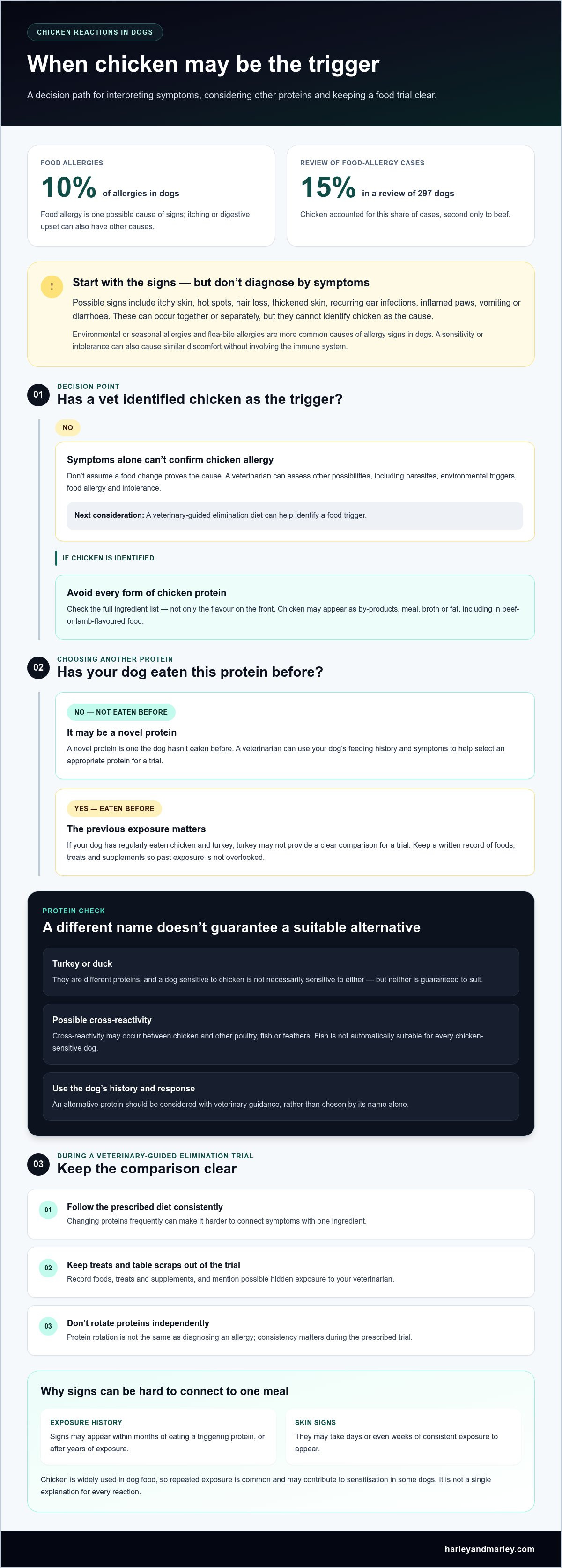
Why are so many dogs allergic to chicken? Chicken is a common food trigger, but most dogs can eat it without a problem. Food allergies account for 10% of allergies in dogs. In a review of 297 dogs with food-allergy cases, chicken accounted for 15% of cases, second only to beef. A true food allergy occurs when the immune system mistakenly identifies a protein as harmful.
Skin and digestive signs can occur together or separately. A dog may develop itchy skin, hot spots, hair loss or thickened skin from persistent irritation. Recurrent ear infections and inflamed paws are other possible signs. Vomiting and diarrhoea can also occur. These symptoms may indicate an adverse food reaction, but they can’t identify chicken as the cause on their own.
There’s no single explanation for why some dogs develop a chicken allergy. Signs can appear within months of eating a triggering protein, or after years of exposure. Skin symptoms may take days or even weeks of consistent exposure to appear. Chicken is widely used in dog food, so repeated exposure is common and may contribute to sensitisation in some dogs.
Not every food reaction is an allergy. A sensitivity or intolerance can cause similar discomfort without involving the immune system. Beef, lamb, soy, egg, dairy and wheat are also common food-allergy triggers. Environmental or seasonal allergies and flea-bite allergies are more common causes of allergy signs in dogs. A veterinarian can assess these possibilities and distinguish food-related symptoms from other causes.
Check for parasites before assuming itchy skin is caused by food. Fleas can trigger allergy-like irritation, so their presence matters when assessing symptoms. Exposure can also be less obvious: flavoured parasite-prevention tablets may contain chicken, and a dog may share a bowl with another pet eating chicken. Mention these possibilities when discussing potential triggers with your veterinarian.
If chicken is identified as the trigger, avoid every form of chicken protein, including by-products, meal, broth and fat. Read the full ingredient list, not just the flavour on the front. Beef- or lamb-flavoured dog food may still contain chicken. Changing food can reduce exposure, but it can’t confirm an allergy on its own. Veterinary guidance helps identify the trigger and choose a suitable chicken-free diet.
Possible cross-reactivity between chicken and other proteins
A reaction to chicken doesn’t automatically mean a dog will react to every poultry protein. Turkey and duck are different proteins, and a dog sensitive to chicken isn’t necessarily sensitive to either. However, possible cross-reactivity can occur between chicken and other poultry, fish or feathers. So an alternative protein should be judged by the dog’s history and response, not simply by its name.
Allergy and intolerance describe different processes. In a food allergy, the immune system responds to a protein it mistakenly treats as harmful. An intolerance doesn’t involve the immune system, even though it can cause similar digestive or skin symptoms. For example, itching after a chicken meal may raise suspicion, but it can’t show whether the cause is allergy, intolerance or another trigger.
Turkey and duck may suit some dogs that react to chicken, but they aren’t guaranteed alternatives. Another poultry protein may be unsuitable if cross-reactivity is involved. Fish also requires care, because it can be part of possible cross-reactivity with chicken. A veterinarian can help select an unrelated protein for a food trial, using the dog’s previous diet and symptoms to guide the choice.
A novel protein is one the dog hasn’t eaten before, so its feeding history matters. If a dog has regularly eaten chicken and turkey, choosing turkey for a trial may not provide a clear comparison. Keep a written record of foods, treats and supplements. This helps identify previous exposure and prevents an ingredient from being overlooked when selecting a trial diet.
Protein rotation is sometimes discussed as a way to vary a dog’s diet. One suggested approach is to rotate protein sources every 1-2 weeks. But rotation isn’t the same as diagnosing an allergy: changing proteins frequently can make it harder to connect symptoms with one ingredient. During a veterinary-guided elimination trial, consistency matters, so follow the prescribed diet rather than rotating proteins independently.
Once a trigger has been identified, the suitable choice depends on the dog’s tolerance, dietary history and nutritional needs. A fish-based food may be a possible option for some dogs, but fish isn’t automatically suitable for every chicken-sensitive dog. For broader dog food options by protein, consider how each ingredient fits the dog’s feeding history and any veterinary advice.
What are the best chicken-free dog foods?
The right choice depends on whether chicken allergy is suspected or diagnosed. Ingredient labels matter as much as the flavour named on the packaging.
Hypoallergenic and limited-ingredient diets
A limited-ingredient diet uses a narrower selection of ingredients, while a hypoallergenic diet is intended for dogs with suspected or diagnosed food allergies. For a dog reacting to chicken, fewer protein sources can make ingredients easier to track. Veterinary-formulated, limited-ingredient diets are among the options often recommended for diagnosed food allergies.
“Hypoallergenic” on a label doesn’t replace checking the ingredients. Compare the full ingredient list with your dog’s known triggers, including chicken-derived components. Veterinary guidance is particularly relevant if itching or digestive signs are being investigated, since changing everyday food alone can’t establish an allergy.
Alternative and hydrolysed proteins
An alternative-protein diet uses a protein other than the suspected trigger, while a hydrolysed-protein diet is another type often recommended for diagnosed food allergies. The right option depends on the dog’s food history and the protein being assessed. Fish may be considered as an alternative, but it isn’t automatically suitable for every dog.
Choose a diet as part of a clear veterinary plan, rather than switching between proteins in response to each bout of itching. A consistent food trial can help assess the suspected trigger. Extra treats or foods containing other proteins may complicate that assessment.
Poultry-free diets
A poultry-free diet excludes chicken and other poultry proteins, reducing exposure for dogs suspected of reacting to chicken. It can be useful when avoiding chicken alone might leave other poultry ingredients in the bowl. Check the complete ingredient list instead of relying on front-of-pack descriptions such as “beef flavour”.
Read the label each time you choose a food, and compare the named ingredients with your dog’s dietary plan. A poultry-free choice may help limit exposure, but the suitable protein still depends on the individual dog’s tolerance and food history.
Ingredients to avoid
Dogs with a chicken allergy should avoid all forms of chicken protein, including chicken by-products, meal, broth and fat. These ingredients can appear in commercial dog food even when its stated flavour is beef or lamb. Check the ingredient panel for each form, not just for the word “chicken”.
Remember foods beyond the main meal: chicken-containing treats can add to exposure. During a veterinary elimination trial, avoid other foods, treats and table scraps. This keeps the diet consistent and makes it easier to assess whether the chosen food is associated with changes in itching or digestive signs.
Veterinary diagnosis and elimination diets
A veterinary assessment helps distinguish a food reaction from other causes of discomfort. It considers the dog’s symptoms, feeding history and possible exposures, including parasites or environmental allergens. Record the foods, treats and supplements your dog receives, then note when symptoms appear. These details help the veterinarian decide whether an elimination trial is appropriate and which protein sources to assess.
Blood tests aren’t accurate for diagnosing food allergies in dogs, although they can help identify environmental allergens. Changing the diet alone also can’t confirm a food allergy: symptoms may improve for reasons unrelated to the suspected ingredient. Without veterinary advice, an owner may overlook another cause, choose an unsuitable diet or prolong the dog’s discomfort. An assessment helps direct the investigation instead of relying on symptoms alone.
A dietary elimination trial removes suspected triggers while providing a chosen diet consistently. Such trials typically last 8 to 12 weeks, or 1-3 months. The veterinarian selects the diet according to the dog’s feeding history and suspected protein sources. Keeping the trial consistent matters: chicken in a treat, table scrap or flavoured supplement can undermine the assessment.
During the trial, feed only the agreed diet and water, unless the veterinarian gives different instructions. Don’t add treats, scraps, chews or flavoured supplements, as these introduce other ingredients. Tell household members what the dog can eat, and keep other pets’ food separate. A shared bowl or dropped food can cause accidental exposure and make the response harder to interpret.
Keep a simple daily record of meals, medication and symptoms. For example, note changes in itching, ear or skin infections, vomiting and diarrhoea. Improvement during elimination can support further investigation, but it doesn’t prove chicken caused the original signs. A structured record gives the veterinarian useful detail when reviewing the dog’s response and deciding what happens next.
If symptoms settle, chicken may be reintroduced for 14 days under veterinary guidance to check whether the original signs return. Do not conduct this challenge independently. The veterinarian considers the dog’s response and the timing of symptoms, then interprets the result alongside the elimination period. Reintroduction is a planned diagnostic step, not an invitation to resume chicken permanently.
After chicken is eliminated, symptoms may take up to three months to stop completely. That timescale makes follow-up important, especially if itching or digestive signs persist. A veterinarian can review adherence, hidden food sources and other possible triggers before changing the plan. Clear feeding records and a consistent diet make each stage easier to assess.
Suitable foods for dogs with chicken allergies
Suitable food depends on the confirmed trigger, the dog’s feeding history and nutritional needs. A chicken-free label alone doesn’t establish that a food is appropriate.
Suitable alternative protein foods
An alternative-protein food replaces chicken with another protein, such as fish, beef or lamb. Avoiding the suspected trigger can reduce exposure, but the replacement must also suit the dog’s individual sensitivities. A protein that works for one dog may not work for another.
For a diagnosed allergy, veterinary-formulated, limited-ingredient or hydrolysed-protein diets are often recommended. A poultry-free food can also reduce exposure to chicken and other poultry proteins. If fish is being considered, remember that possible cross-reactivity varies between dogs. Use the dog’s food history and veterinary plan to guide the choice.
Choosing suitable foods
Start with the full ingredient panel, not the product name or front-of-pack flavour. A food described as beef or lamb flavour may still contain chicken broth, fat or meal. Those ingredients can maintain exposure even when chicken isn’t the named protein. Check each ingredient against the trigger the veterinarian is investigating.
Next, consider whether the food is complete and balanced. A suitable diet should provide high-quality protein, essential fatty acids, vitamins and minerals. These nutrients help maintain a healthy skin barrier and reduce inflammation. This matters because ongoing itching or vomiting can affect comfort, while an unbalanced replacement may create nutritional problems.
Keep the purpose of the food clear. A veterinary elimination diet is designed to assess possible causes of symptoms, so extra foods can undermine the trial. An everyday chicken-free diet, by contrast, is chosen for longer-term feeding after the trigger and suitable ingredients have been considered. Don’t treat these two choices as interchangeable.
For a routine switch between dry dog foods, use a gradual transition over a week: serve 25% new kibble and 75% old kibble on days 1-2, equal proportions on days 3-4, then 75% new and 25% old on days 5-6. From day 7 onwards, feed 100% new kibble. During an elimination diet, follow the veterinary feeding plan instead.
Monitor your dog’s response to the chosen food, including skin comfort and digestive signs. Record the food and any treats, and note changes such as less itching or recurring vomiting. That record can help distinguish a food-related response from other causes and support a more informed discussion with the veterinarian.
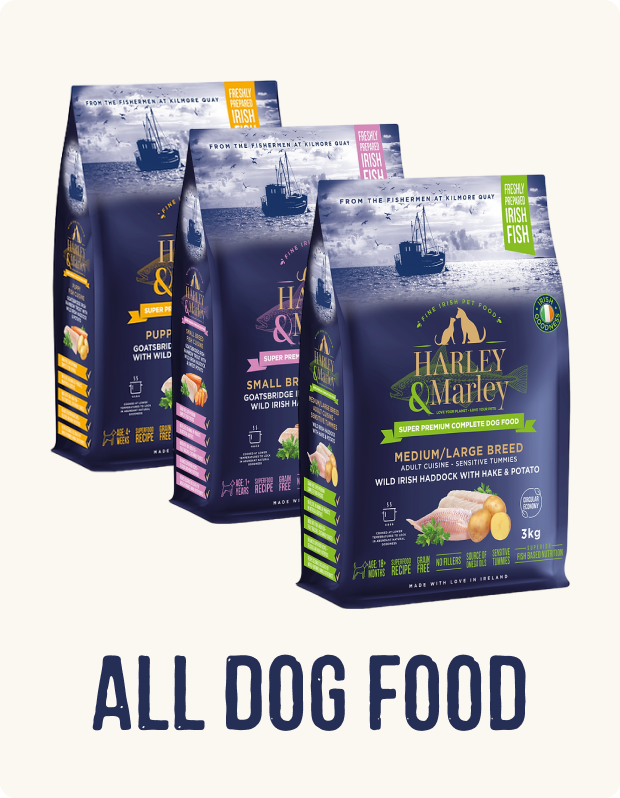
Harley & Marley: Medium/Large Breed Complete Food
Harley & Marley’s Medium/Large Breed Complete Food gives owners of medium and large dogs a fish-based complete food to consider for everyday feeding. Fish may suit some dogs avoiding chicken, but it can also be involved in cross-reactivity, so it isn’t automatically right for every dog with a suspected chicken allergy.
Use your veterinarian’s advice to decide whether a fish-based diet fits your dog’s food history and allergy plan. If it does, this complete food may be a practical option for a medium or large breed. Harley & Marley also offers Puppy Complete Food, Small Breed Complete Food and Senior Dog Complete Food for dogs at different life stages.
For more information about Harley & Marley’s complete foods, visit the Harley & Marley website.
Make the next food choice with confidence
Understanding why so many dogs are allergic to chicken can help you approach feeding decisions with care, but the next step is to match the food to your dog’s needs rather than follow a trend. Keep your veterinarian’s dietary recommendations alongside your dog’s food history when comparing options. A clear plan makes it easier to choose food for everyday feeding without confusing that choice with a diagnostic trial.
For dogs whose veterinary plan allows a fish-based complete food, Harley & Marley offers Medium/Large Breed Complete Food, Puppy Complete Food and Small Breed Complete Food. The right option depends on your dog’s life stage and size, as well as whether its ingredients suit the plan. Fish isn’t automatically suitable for every dog with a suspected chicken allergy.
Contact Harley & Marley for help exploring its complete food options. A considered choice can support a calmer, more confident feeding routine for you and your dog.
Harley & Marley for your dog’s food choices
Harley & Marley offers complete food for medium and large breeds, puppies, small breeds and senior dogs, alongside grain-free dog food. If chicken may be behind your dog’s reaction, consider these options when reviewing its diet with your veterinarian.
Harley & Marley also offers a monthly food box, dog bundles, fish oil, chews and bites, and towels and toys.
Frequently Asked Questions
Should you stick to avoiding chicken or is there a way to treat the sensitivities?
If chicken is confirmed as the trigger, avoid chicken protein to prevent further dietary exposure. A veterinarian can also treat symptoms such as inflamed skin or ear infections, but symptom relief doesn’t remove the food trigger. Keep checking treats, supplements and flavoured medications, which may introduce chicken unexpectedly. Don’t reintroduce chicken to test for a reaction without veterinary guidance.
Are there natural remedies for dog food allergies?
No natural remedy can reliably identify or remove a food allergy. Keep feeding consistent and record meals, treats and symptoms rather than introducing several supplements at once. For example, adding a new oil during a food trial can make changes harder to interpret. A veterinarian can assess whether the dog’s diet provides suitable nutrition while the suspected trigger is investigated.
How are allergies linked to your dog’s gut health?
Around 70% of a dog’s immune cells that maintain immunological function are located in the gut. This doesn’t mean a food allergy is simply caused by poor gut health, or that a supplement can cure it. For instance, vomiting after a meal needs assessment alongside skin signs and feeding history, rather than being treated as proof of a gut imbalance.
If your dog is sensitive to chicken, does that mean they are sensitive to other poultry, such as turkey?
No, a reaction to chicken doesn’t automatically mean turkey will cause symptoms. Some dogs tolerate turkey or duck, while others may react to other poultry proteins. If turkey has been a regular ingredient in your dog’s food, that history matters when selecting a trial diet. Avoid testing several poultry options at home, as simultaneous changes make it difficult to link a response to one protein.
Is it possible for a dog to suddenly develop a food allergy?
Yes, signs can appear after a dog has eaten the same food for a long time, making the reaction seem sudden. Owners asking, “Why are so many dogs allergic to chicken?” should know that symptoms can emerge after years of exposure. A new flare-up can also have another cause, so note recent changes in food, treats, medication and environment for your veterinary appointment.
What about just switching my dog’s food?
Changing food can reduce exposure to an ingredient, but improvement alone doesn’t prove an allergy. A sudden change can also cause digestive upset, making it harder to judge the original problem. If a veterinarian recommends an elimination trial, follow its feeding plan and record accidental extras, such as a visitor’s treat. Consistency helps make your dog’s response useful evidence.
What are other foods that commonly trigger allergy symptoms?
Beef, lamb, soy, egg, dairy and wheat are also common food-allergy triggers in dogs. That doesn’t mean every itchy dog needs to avoid all these ingredients. Removing chicken and beef together, for example, makes it difficult to tell which change affected symptoms. Use the dog’s feeding history to guide the investigation, and avoid restricting several food groups without a veterinary plan.
Why do some dogs develop an allergy to chicken protein?
The key to why some dogs are allergic to chicken is the immune response: a dog’s immune system mistakenly identifies chicken protein as harmful. Chicken is widely used in dog food because it is available, palatable and nutritious, so dogs may encounter it repeatedly. Repeated exposure may contribute to sensitisation in some dogs, but it doesn’t mean chicken causes allergies in every dog.