


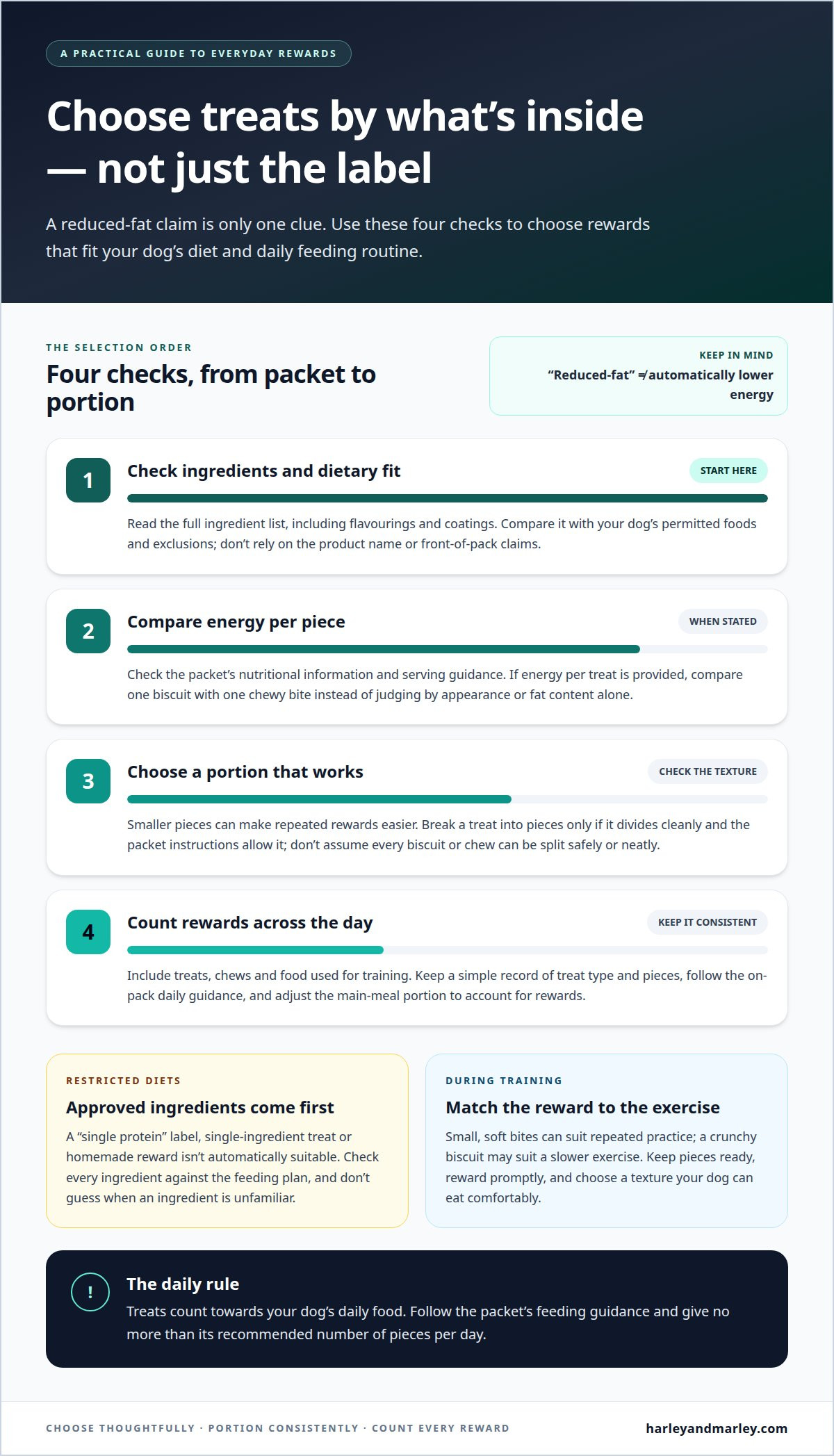
A reward still counts towards your dog’s daily food. When choosing low calorie dog treats for training, follow the on-pack feeding guidelines and give no more than the recommended number of pieces per day. Adjust your dog’s main-meal portion when treats are part of the daily routine.
It’s understandable to want rewards that keep training positive while supporting your dog’s overall diet. The right choice depends on more than size: texture, portioning and dietary restrictions all affect which treat is suitable.
This guide compares crunchy biscuits, chewy bites and reduced-fat options, as well as treats for restricted diets and rewards that work well during training. You’ll also find practical ways to fit treats into everyday feeding, so you can reward good behaviour with confidence.
Key Takeaways
- Compare crunchy and chewy rewards by how easily they can be portioned and offered during training.
- Assess reduced-fat treats as part of your dog’s overall feeding plan, not as a reason to give extra rewards.
- For restricted diets, choose rewards that fit the ingredients and dietary limits your dog already follows.
- Keep training rewards practical and consistent, and use the on-pack guidance to help manage daily treat portions.
Reduced-fat treats for weight management
A reduced-fat label can help narrow your options, but it doesn’t show how much energy each reward provides. Compare the nutritional information and serving guidance on each packet. If an energy value per treat is provided, consider it alongside the fat content: a lower-fat option isn’t automatically lower in energy. Compare the stated energy in one biscuit with that in one chewy bite rather than judging by appearance.
Portion size matters, too. A small treat may be easier to use repeatedly than a large biscuit, provided its ingredients suit your dog. Check whether the product can be broken cleanly; if it can, smaller pieces may make one treat go further during practice. Don’t assume every biscuit or chew can be divided safely or neatly. Follow the packet instructions for that product.
- Read the ingredients and nutritional information before choosing a reduced-fat reward.
- Compare the stated energy per piece when that information is provided.
- Use smaller pieces for repeated rewards, if the treat can be divided as directed.
- Count treats alongside other extras, such as chews and food used for training.
Keep a simple daily record when changing rewards. Note the treat type and number of pieces, then adjust your dog’s main-meal portion to account for treats. Follow the on-pack feeding guidelines and give no more than the recommended number of treat pieces per day. This helps you see whether training rewards are replacing part of the usual food allowance or being added on top.
For weight management, consistency is more useful than relying on a “light” label alone. Choose a suitable option, measure each piece according to the packet guidance, and keep portions steady across walks, training sessions and rewards at home. If your dog follows a specific feeding plan, choose treats that fit it rather than casually adding a new ingredient or changing portions.
Treats for dogs on restricted diets
With a restricted diet, ingredient choice matters as much as treat size. Start with the foods your dog can eat, then compare each treat’s ingredients with that list.
Treat choices for restricted diets
Read the full ingredient list, not just the product name or front-of-pack claims. A treat labelled “single protein”, for example, still needs to be checked against your dog’s permitted ingredients. Compare the ingredients with those excluded from your dog’s feeding plan, including flavourings and coatings.
Single-ingredient treats and homemade rewards aren’t automatically safe or low in calories. Their suitability and energy content depend on the ingredient, preparation and portion. Use them only if the ingredient fits your dog’s restrictions and its calorie content is known.
Keep the routine simple: introduce one compatible treat at a time and note what you offered. If your dog’s diet excludes an ingredient, remove treats containing it from training and everyday rewards. A written list of permitted ingredients makes it easier to compare packets.
Ingredients to avoid in dog treats
Avoid ingredients excluded by your dog’s feeding plan or known to cause a reaction. If a specific protein is excluded, for example, check every ingredient line for it, including named derivatives. Don’t rely on a treat’s flavour or marketing description to establish what it contains.
Choose products with clearly named ingredients and compare the list with your dog’s restrictions before buying. If an ingredient is unfamiliar, don’t guess whether it fits the plan. Keep the packet so you can refer to its full ingredient list against the permitted foods.
For homemade rewards, use only ingredients already allowed in your dog’s diet. Keep preparation separate from excluded foods and measure each portion rather than offering pieces freely. Even a plain piece of approved food contributes energy, so include it in the day’s overall feeding routine.
Before training, put the day’s approved rewards in a small container. This helps prevent other household members from offering unsuitable treats and makes it easier to track what your dog has eaten.
Treats for training
During training, a reward should be easy to give straight after the behaviour you want. Small, soft bites can be convenient for repeated practice, while a crunchy biscuit may suit a slower exercise with fewer rewards. Choose a texture your dog can eat comfortably and quickly, so the session can continue without long pauses. Low calorie dog treats for training should suit your dog’s diet, too.
Match the treat to the exercise. For a recall in the garden, keep pieces ready in an accessible pouch and reward your dog as soon as they return. A biscuit that takes longer to chew may interrupt the next repetition when practising a settle at home. Choose a format your dog accepts and that you can offer promptly. Compare low calorie dog treats for training by texture and portion size, not by the label alone.
- Use a pouch or container to keep rewards ready during walks.
- Offer a small piece after the behaviour you’re reinforcing.
- Try a different texture if your dog loses interest or takes too long to chew.
- Keep training treats separate from unplanned snacks, so you can track them.
Variety can help maintain interest, but every treat still needs to suit your dog. For example, alternate a crunchy biscuit with a soft bite only if both fit your dog’s usual diet. If your dog has dietary restrictions, use approved rewards rather than introducing a new ingredient during practice. This keeps the focus on learning, not on testing unfamiliar foods.
Prepare before the session: put the day’s chosen rewards in one container and use them consistently for the behaviour you’re teaching. If a treat is too large for frequent rewards, break it into smaller pieces only if its texture allows. Pairing a treat with a clear spoken cue, such as “come”, helps connect the reward with the action. A calm voice or brief play can also reinforce success without adding another food reward.
How much of a dog's daily food allowance should treats make up?
Use the treat packet’s feeding guidance as your starting point. Follow the on-pack guidelines and give no more than the recommended number of treat pieces per day.
Then account for rewards alongside meals. Adjust your dog’s main-meal portion when giving treats to help maintain a healthy weight. If you give training rewards during a walk, for example, include them when planning that day’s food rather than treating them as extras.
A simple routine makes portions easier to manage. Use these steps:
- Read the packet guidance for the specific treat.
- Set aside the day’s training rewards before a session.
- Count pieces as you give them, including rewards from other household members.
- Adjust the main-meal portion to account for treats given.
Keep the treat type consistent while establishing a routine. A crunchy biscuit and a chewy bite may differ in size, so count the actual pieces against the guidance for that product. If you switch treats, read the new instructions instead of carrying over the previous product’s serving suggestion.
Training can involve frequent rewards, particularly when practising a new behaviour. Smaller pieces may make it easier to reward each successful response, provided the treat can be divided as directed. For example, prepare the permitted pieces in a container before practising recall, then keep track of what remains. This gives you a clearer picture of how many rewards you used during the session.
Include chews and casual snacks in the day’s tally, too. A chew after a walk still contributes to your dog’s overall food routine, even if it wasn’t used for training. If several people feed your dog, keep a brief note of treat pieces and meal adjustments. This helps maintain consistent portions from morning to evening.
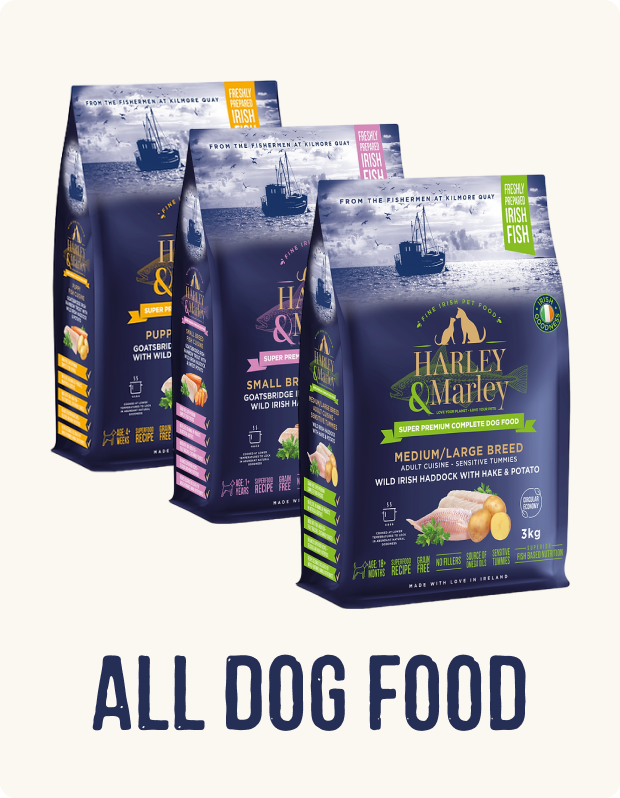
Harley & Marley: Medium/Large Breed Complete Food
Harley & Marley offers Medium/Large Breed Complete Food for owners planning a complete meal alongside carefully portioned training rewards. A consistent main food can help you plan daily feeding when treats are part of your dog’s routine.
Choose a complete food suited to your dog’s life stage and size: Puppy Complete Food, Small Breed Complete Food and Senior Dog Complete Food are also available. Treats are rewards, so account for them when planning meals and follow the feeding guidance on each product’s packaging.
If you’re reviewing your dog’s everyday food as well as training treats, explore Harley & Marley’s complete food options and get in touch with your enquiry.
Make rewards part of a routine that lasts
Build a reward routine you can maintain on everyday walks, at home and during new training exercises. Keep it simple: choose treats that suit your dog, prepare them before practice and note what works. Low calorie dog treats for training are most useful when they fit your dog’s needs and your everyday habits.
As your dog learns, vary the reward thoughtfully without losing sight of their overall feeding routine. If you’re also considering your dog’s main food, explore Harley & Marley’s complete food range alongside your choices for everyday rewards.
Contact Harley & Marley to discuss your dog’s food needs and take the next step with confidence.
Frequently Asked Questions
Are low-calorie training treats suitable for puppies and dogs with health conditions?
Treats are suitable only when their ingredients and feeding guidance fit the individual dog’s needs. For a puppy, choose rewards appropriate to its life stage and don’t let treats displace complete puppy food. For a dog with a health condition or restricted diet, compare the treat ingredients with its feeding plan; a low-calorie label alone doesn’t establish suitability.
What are healthy alternatives to commercial dog treats for training in Ireland?
Use a plain piece of food already approved for your dog’s diet as a training reward. Measure each portion and count it among the day’s treats, adjusting the main-meal portion as needed.