


A change of food isn’t always the answer to a dog’s dry skin. If you’re wondering what to feed a dog with dry skin, start by reviewing their diet: the right nutrients support healthy skin and coat. But parasites, allergies and other health concerns can also cause flaking or irritation, so the food bowl may not tell the whole story.
It’s understandable to be unsure which ingredients matter or whether a supplement might help. This guide explains what to look for in a complete food, how nutrients such as essential fatty acids support skin and coat, and how to make feeding changes thoughtfully. Fish-based complete food made with freshly prepared Irish fish is one option to consider as part of a balanced diet.
You’ll also learn why fish oil is an optional supplement, not a replacement for complete food or veterinary care, and why adding it without guidance may not be the best next step. Most importantly, we’ll cover when ongoing or worsening skin problems call for a vet’s assessment rather than more experimentation with your dog’s diet.
Key Takeaways
- When deciding what to feed a dog with dry skin, start with complete food suited to their life stage rather than relying on a single ingredient.
- Note whether you’re seeing flakes alone or signs such as persistent itching and inflamed skin, as these may point to different concerns.
- Compare complete foods and supplements by their nutritional role. They aren’t interchangeable solutions.
- Keep a record of skin changes and make one planned feeding adjustment at a time, following veterinary or product guidance.
- Fish-based complete food is one option to consider, while ongoing skin changes are a reason to seek veterinary advice.
What to feed a dog with dry skin: start with the cause, not a quick fix
If your dog has dry skin, choose a nutritionally complete food suited to their life stage, but don’t assume a food change will resolve persistent symptoms. The answer to what to feed a dog with dry skin depends partly on why their skin has changed. A balanced diet supports overall health, including skin and coat, but it cannot identify or treat every underlying problem.
Dry skin may look flaky, rough or less supple than usual. A few visible flakes are not the same as persistent itching, redness or soreness. Those signs may indicate irritation or inflammation, which can have several causes. Nutrition is one part of dog health and nutrition, but parasites, infection and environmental allergies can also affect the skin. In dogs eating a complete commercial diet, a nutritional deficiency is not the only possible explanation for new skin changes.
Look at the whole picture. Has your dog started scratching, licking or chewing? Is their coat dull, thinning or patchy? A change in food may help ensure your dog receives appropriate nutrients, but it won’t confirm whether a food allergy is present. Diagnosis needs a considered veterinary approach, not guesswork based on one ingredient or symptom.
Which signs might accompany dry skin?
Possible signs include dandruff-like flakes, itching, redness, scabs and changes in coat condition. They can appear together or separately, and no single sign identifies the cause. Flakes don’t prove that a diet is deficient, for example, while scratching may relate to parasites, infection or allergies rather than dryness alone.
Make a simple note of when you first noticed the change and where it appears. Record whether it is spreading, whether your dog is scratching or licking more, and any recent changes to food or routine. These details can give your vet useful context.
When is dry skin more than a feeding question?
Arrange a veterinary assessment if scratching persists, discomfort worsens, or you notice sores, hair loss or an unusual odour. These signs deserve attention rather than repeated food changes. Parasites, infections and allergies may need to be identified and treated. Adjusting meals alone may delay the right care.
Seek advice promptly if the skin is becoming more inflamed or your dog seems increasingly uncomfortable. Avoid using home remedies or supplements as substitutes for an assessment. Once the cause is clearer, you can discuss whether the existing diet is appropriate and whether a planned nutritional change makes sense.
Which nutrients and ingredients should a dog’s dry-skin diet provide?
Start with food labelled complete for your dog’s life stage, then assess its overall nutrition rather than searching for one “skin” ingredient. Puppies, adults and senior dogs have different nutritional needs, and complete food is formulated to provide a balanced range of nutrients. Dietary fats supply energy and essential fatty acids, which contribute to normal skin and coat function. They’re part of good nutrition, not a guaranteed treatment for itching or a skin condition.
Protein, vitamins and minerals also support body tissues, including skin and hair. Focus on the full formulation and feeding guidance, not a prominent ingredient claim in isolation. When considering what to feed a dog with dry skin, take account of their age, size, activity and any advice from your vet.
How do omega-3 fats relate to skin and coat?
EPA and DHA are omega-3 fatty acids found in some fish and fish oils. They’re nutritional components that support normal body functions, including those involved in skin health, but they can’t be relied on to resolve itching or treat an underlying allergy or disease. A complete food may already provide fats as part of its recipe. Adding an oil is a separate choice.
Fish-oil supplements can increase omega-3 intake, but suitability and amount depend on the individual dog and their current diet. Ask your veterinary professional before adding one, particularly if your dog has a health condition or takes medication. An itchy dog may need investigation beyond nutrition, so use supplement advice as part of a broader care plan, not as a substitute for assessment.
How should owners read a dog-food label?
Check that the food is labelled complete for your dog’s life stage, then read the ingredient list as a whole. Named protein sources can help you understand what the recipe contains, especially if your vet is investigating a suspected food reaction. A grain-free label or a single highlighted ingredient doesn’t, by itself, prove that a food is suitable for an allergy.
- Look for: complete food appropriate for your dog’s age or life stage.
- Review: named protein sources and the full ingredient list, not just front-of-pack claims.
- Keep in mind: a suspected food allergy needs a veterinary-led approach, not ingredient guesswork.
Everyday feeding matters too. Use the food’s feeding guidance as a starting point, then adjust with veterinary advice to suit your dog’s body condition and activity. Keep fresh water available at all times. If you’re considering fish as part of a balanced feeding plan, explore fish-based complete dog food as one option, not as a remedy for skin disease.
Fish-based food, supplements or a standard diet: what should you compare?
These options have different roles. Complete food provides a dog’s daily nutrition; a supplement adds a specific nutrient to an existing feeding plan. Neither should be treated as a quick cure for dry skin. To decide what to feed a dog with dry skin, compare each option by its nutritional role, suitability for your dog and limitations. Don’t assume that fish or a particular label will resolve symptoms.
| Option | Intended nutritional role | What to check | Key limitation |
|---|---|---|---|
| Fish-based complete food | Provides daily nutrition with fish as a protein source. | That it’s labelled complete for your dog’s life stage, and the full ingredient list. | Fish doesn’t guarantee relief or prove the food is suitable for an allergy. |
| Another complete diet | Provides balanced daily nutrition according to its formulation. | Life-stage suitability, named ingredients and feeding guidance. | A food change alone may not address parasites, infection or environmental allergies. |
| Fish-oil supplement | Adds fish oils to the existing feeding plan. | Product guidance and whether it suits your dog’s diet and health. | It isn’t complete food or a substitute for veterinary care. |
“Grain-free” describes an ingredient choice, not proof that a diet will improve skin or suit a dog with a suspected allergy. Likewise, choosing a fish-based recipe doesn’t establish that fish is the right protein for an individual dog. A food allergy can’t be confirmed by simply switching ingredients. A veterinary professional can help plan an investigation and may recommend a strict elimination diet followed by a controlled challenge.
When might fish-based complete food be worth considering?
Fish can be a named protein option for owners reviewing what their dog eats, provided the food is complete and appropriate for the dog’s life stage. Harley & Marley’s complete dry food is made with freshly prepared Irish fish. It’s one considered feeding option, not a treatment for skin disease. For more on how fish fits into canine nutrition, see this fish-based dog food guide.
When is a supplement different from changing the main food?
Changing complete food changes the dog’s main diet; adding fish oil supplements that diet. Harley & Marley Finest Fish Oil is a multi-fish blend containing salmon, mackerel and blue whiting oils, not a replacement for complete food. Don’t guess an amount or add it automatically. Follow the product guidance and discuss its suitability with your veterinary professional, particularly if your dog has ongoing skin signs or other health needs.
How to adjust your dog’s feeding plan safely
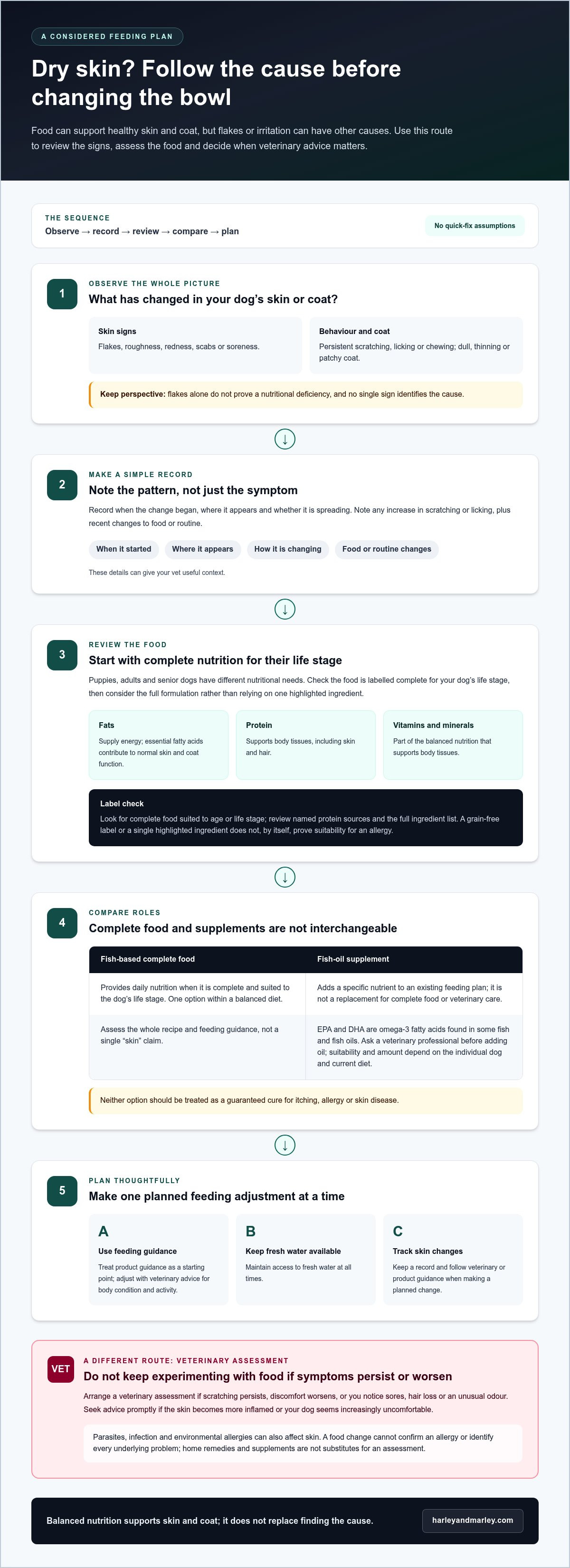
A measured plan makes it easier to see what may help and avoids unnecessary changes to your dog’s meals. If you’re weighing up what to feed a dog with dry skin, work through the steps in order: record what you’re seeing, review the current food and extras, seek veterinary advice if symptoms persist or suggest an underlying problem, then make one planned change.
- Record the starting point. Note when the skin changes began, where they appear and whether they’re getting better or worse.
- Review the full diet. Include the main food, treats, chews, supplements and any shared food, not just the bag of dog food.
- Get advice where needed. A vet can help assess ongoing signs and advise whether a diet change is appropriate.
- Make one change at a time. Follow veterinary advice or the food’s transition guidance, and keep the rest of the routine as consistent as possible.
Change food gradually in line with that guidance rather than switching abruptly. The right transition depends on your dog and the product instructions. A planned change also makes it easier to notice digestive changes, which could otherwise be confused with the skin concern.
What should owners track during a food change?
Keep a simple daily or weekly log of scratching, flakes, redness and coat condition, alongside any digestive changes. Note what food and treats your dog ate, any supplements given, and relevant environmental changes such as a new washing product or time spent in a different setting. A brief note or photo can help you describe the pattern at a veterinary appointment.
Consistency matters. Avoid changing the plan in response to every small fluctuation unless your vet advises it. Skin signs can have causes unrelated to food, so a log helps build a clearer picture without treating each flare-up as evidence that the diet has failed.
How can owners avoid common feeding mistakes?
Don’t introduce a new food, oil and several treats all at once. If signs change, you won’t know which adjustment may be relevant. Avoid using human foods or topical oils as unverified skin treatments. These can distract from finding the cause and may not be suitable for your dog.
A food described as poultry-free may help you understand a recipe’s protein choices, but the label alone can’t diagnose an allergy or establish that a diet is right for an individual dog. If you’re researching ingredient choices, read this guidance on poultry-free dog food alongside veterinary advice.
There’s no guaranteed timeline for a visible change, and results vary. If symptoms persist, worsen or return, seek reassessment rather than cycling through foods or adding more supplements. If you’re considering a complete fish-based option as part of a planned diet change, explore fish-based dog food.
Harley & Marley fish-based food: a considered option for skin-supportive feeding
After reviewing the nutritional basics, fish-based complete food may be one option to consider as part of your dog’s everyday diet. It provides a different named protein source, but it isn’t a treatment for dry skin, allergies or other skin conditions. If your dog has ongoing or worsening symptoms, speak with your vet before relying on a food change to address them.
What makes the complete dry food relevant to this choice?
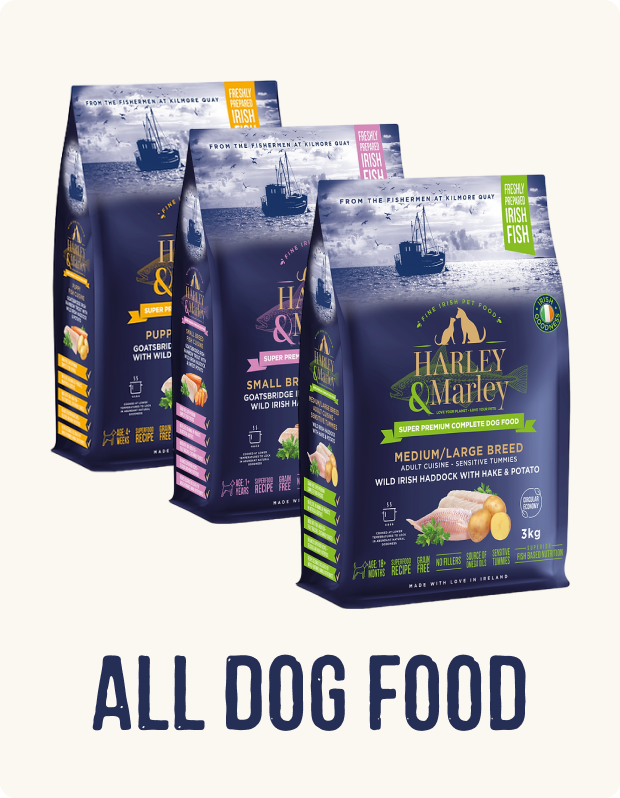
Harley & Marley Super-Premium Complete Dry Food is made with freshly prepared Irish fish, including salmon, mackerel, blue whiting, trout and haddock. The brand describes its fish sources as fully traceable and its food as made with natural Irish ingredients. The food is grain-free and formulated without fillers, binders or artificial colours, flavours or preservatives.
The range includes options for puppies, small breeds, medium and large adult dogs, and senior dogs, including weight-management needs. Matching food to life stage and size keeps the choice centred on your dog’s overall nutritional requirements rather than a single skin-related claim. Fish may be a suitable protein choice for some dogs, but it won’t establish whether an allergy is present or whether a particular diet is right for your pet.
How can owners explore the range responsibly?
Start by identifying your dog’s life stage and reviewing the feeding guidance for the relevant complete food. If you’re considering a change because of skin symptoms, keep your vet involved, particularly if the signs persist or your dog has other health needs. Complete food should remain the foundation of the diet. Fish oil is an optional, separate supplement, and should only be added with appropriate product and veterinary guidance.
Make one planned change at a time and monitor your dog rather than expecting a guaranteed skin response. Choosing a fish-based recipe can be a considered nutrition decision, but continued scratching, redness, sores or hair loss still warrant veterinary attention. Food supports wellbeing; it cannot replace diagnosis or treatment when a medical cause is involved.
For a fish-based complete food option, explore Harley & Marley fish-based dog food.
Make your next step a considered one
Choosing what to feed a dog with dry skin doesn’t have to mean making several changes at once. Keep your dog’s usual routine steady, follow veterinary guidance when symptoms persist, and choose food for its complete nutritional role rather than expecting a single ingredient to solve a skin problem.
If you’re considering a fish-based option, Harley & Marley’s complete dry food is made with freshly prepared Irish fish. Its Finest Fish Oil is a separate multi-fish blend, so treat it as an optional supplement and follow product guidance and veterinary advice. Harley & Marley has a five-star Google Reviews rating.
Take the next step at your own pace: explore Harley & Marley’s fish-based complete dog food. With a thoughtful feeding choice and veterinary support when needed, you can make a clear plan for your dog.
Frequently Asked Questions
Can changing my dog’s food help with dry skin?
A food change may help if the current diet isn’t meeting your dog’s nutritional needs or if a vet identifies a food allergy. Dryness alone doesn’t show that food is the cause. If an allergy is suspected, ask your vet about a supervised elimination diet rather than trying several recipes. Keep treats and extras consistent during any planned change so they don’t muddy the results.
Is fish-based dog food good for dogs with dry skin?
It can be a suitable complete-diet option for some dogs, but fish-based food isn’t automatically better for dry skin. Its value depends on the food’s overall nutrition and whether it suits your dog’s individual needs. Fish can also be an ingredient a dog reacts to. If you’re considering it because of suspected allergy symptoms, get veterinary advice before switching, especially if your dog has had reactions to foods before.
Can I give my dog fish oil every day for dry skin?
Daily fish oil may suit some dogs, but don’t add it without checking the product directions and discussing it with your vet. The appropriate amount depends on the product, your dog’s size, health and existing diet. Too much can cause digestive upset and may affect the balance of their overall feeding plan. Tell your vet about any other supplements or medication your dog receives.
How long does it take for a diet change to help a dog’s skin?
There’s no single timeline, and some dogs won’t improve if food isn’t the cause. For omega-3 supplementation, visible changes may take 4 to 8 weeks, but that isn’t a guarantee. A food-allergy investigation follows a different, vet-directed plan and needs consistency, including with treats. Agree a review point with your vet rather than switching again after a few days or assuming early fluctuations prove success or failure.
Does grain-free dog food prevent dry or itchy skin?
No. Grain-free food doesn’t prevent dry skin or itching, and the label alone doesn’t show that a diet will suit a dog with an allergy. Reactions can relate to different ingredients, so removing grains without a clear reason may not address the problem. Choose complete food that fits your dog’s needs. If symptoms suggest a food reaction, seek veterinary guidance on how to investigate it properly.
When should I take my dog to the vet for dry skin?
Arrange a veterinary appointment if your dog’s scratching persists, discomfort worsens, or you notice sores, hair loss or an unusual skin odour. These signs may need assessment beyond a feeding change. Seek urgent veterinary help if your dog develops facial swelling or difficulty breathing. Before an appointment, note when the signs started, affected areas and any recent food or routine changes to help explain the pattern.