


Rotation should be purposeful, not constant. A practical starting point is to change proteins monthly or every few months, introducing each new food gradually over 7-14 days. The pros and cons of a dog food rotation diet depend on your dog’s tolerance, the foods you choose and how carefully you manage each change.
It’s understandable to wonder whether variety could make mealtimes more interesting or whether switching foods might upset your dog’s digestion. Both are worth considering: a rotation diet isn’t automatically right for every dog.
This guide explains what rotation feeding involves, how often to switch and how to transition between proteins or food types. You’ll also learn what to monitor and why complete food suited to your dog’s needs matters more than variety alone.
Key Takeaways
- Rotation feeding can mean changing protein, recipe or food format, but variety is useful only when each food suits your dog’s needs.
- Monthly or less frequent changes give you a practical starting point; introduce each new food gradually to support digestion.
- Choose complete, balanced foods that suit your dog’s age, size and health needs, and change one feature at a time.
- Keep a feeding diary and watch for changes in stools, itching, ears or behaviour to help spot foods your dog may not tolerate.
- For dogs with a history of sensitivities, get veterinary guidance before changing their diet.
What is Rotation Feeding?
Rotation feeding means varying a dog’s protein or food format, such as dry, wet, frozen or raw food. To weigh up the dog food rotation diet pros and cons, start by identifying what will change and how your dog responds.
Potential benefits of food rotation
Food rotation means changing recipes or formats over time instead of feeding the same option continuously. A new texture or flavour may make meals more appealing to some dogs, particularly if they’ve lost interest in their usual food.
Rotating complete diets gives a dog a chance to experience different foods. For example, alternating dry food with a higher-moisture food may add variety and increase water intake. The dog food rotation diet pros and cons depend on your dog’s needs, not variety alone.
Dietary variety and nutrition
Dietary variety means offering different ingredients or nutrient profiles through suitable foods. Beef naturally contains vitamin A, rabbit vitamin D, and salmon omega-3 fatty acids, so varying proteins changes which nutrients feature in the diet.
Choose foods labelled complete and balanced, and suited to your dog’s age, breed and health needs. A puppy, for example, needs food formulated for growth. Treats and toppers shouldn’t replace a complete diet: variety alone doesn’t ensure balanced nutrition.
Raw diets in a rotation
Raw food is one way to vary a dog’s food format and texture. Some owners may value it as part of a broader rotation, but variety doesn’t mean raw food is nutritionally superior to other formats.
Raw meat can carry Salmonella and E. coli, which may pose risks to dogs and people. Homemade raw diets can also be nutritionally imbalanced, for example, if they contain too much muscle meat or too little organ meat. Robust studies of long-term benefits are scarce, while bacterial contamination risks are well documented.
Digestive upset as a downside
Changing foods can cause temporary digestive upset, including softer stools. A sudden switch makes it harder to tell whether a reaction is linked to the new protein, food format or another ingredient.
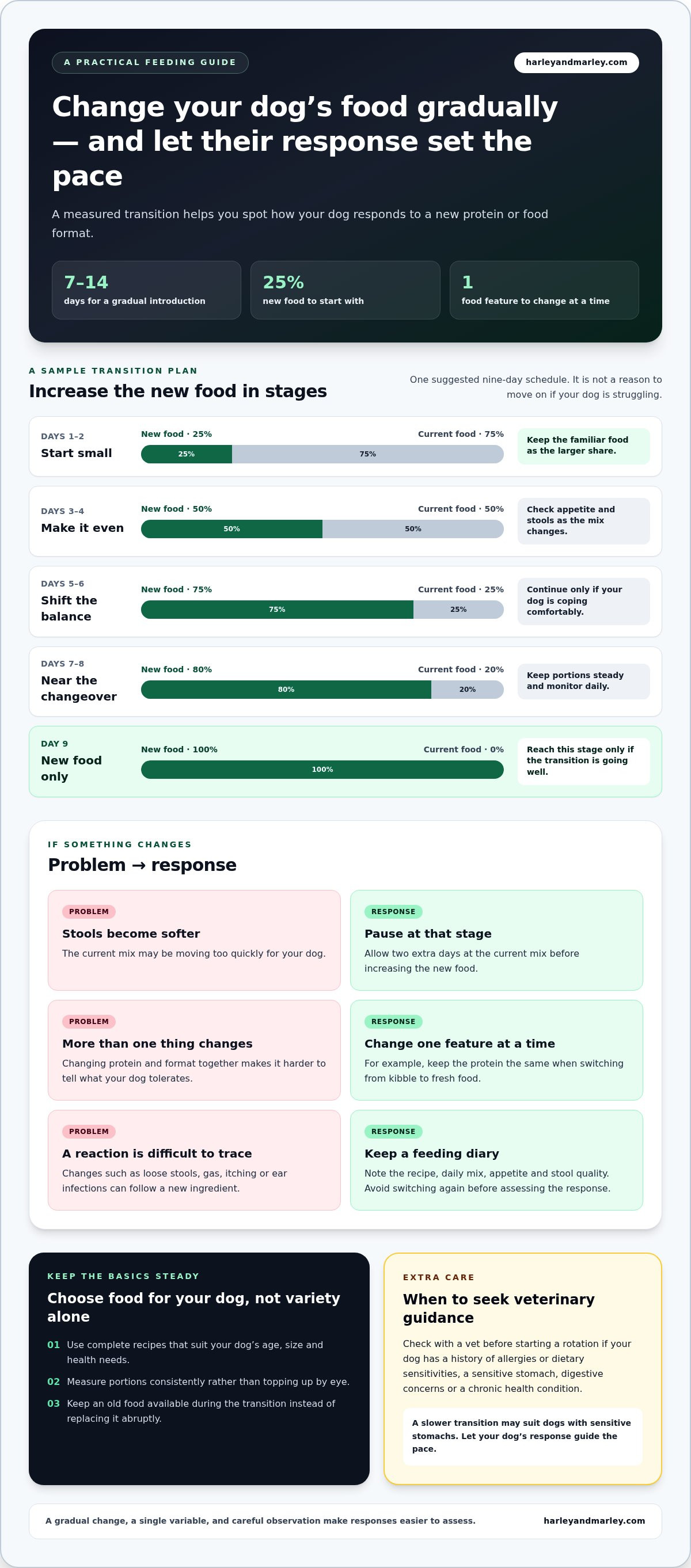
Introduce a new food gradually over 7-14 days, starting with 25% new food and 75% current food. Increase the new portion in stages, watching your dog’s stools and appetite as you go. If stools soften, allow two extra days at that transition stage before increasing the new food again.
Can I rotate between kibble and fresh food?
Yes, dogs can rotate between kibble and fresh food if both meet their nutritional needs. The key is to make the change gradually, letting your dog’s appetite, stools and comfort guide the pace.
Introducing new foods gradually
Introduce the new food gradually by mixing small amounts into your dog’s usual meals. This gives your dog time to adjust to differences in taste and texture, while making digestive changes easier to spot.
Start with 25% new food and 75% current food, then increase the new portion in stages. Keep the old food available during the transition rather than replacing it abruptly. If your dog’s stools soften, hold at the current mix for two extra days before increasing the new food.
Change one feature at a time. For example, keep the protein the same when switching from kibble to fresh food, rather than changing both the protein and format together. That makes it easier to see which change your dog tolerates well.
Transitioning between proteins
A protein transition gradually replaces one main protein with another, such as chicken with salmon. A seven-day transition is one suggested approach, but the pace should reflect your dog’s response and how different the foods are.
Use a complete recipe at each stage and measure portions consistently instead of topping up by eye. Keep a feeding diary of the protein, daily mix, appetite and stool quality. If loose stools or gas appear after introducing salmon, your notes can help distinguish a food response from an unrelated change.
Dogs with sensitive stomachs may need a slower transition. Significant diet changes call for veterinary guidance, particularly if your dog already has digestive concerns or a health condition.
Planning a gradual transition
A transition schedule sets out how the proportions change over time. For example, a nine-day plan can move from 25% new food and 75% current food on days 1 and 2, to equal proportions on days 3 and 4.
On days 5 and 6, increase the new recipe to 75%; on days 7 and 8, feed 80% new food and 20% old food. By day 9, the plan reaches 100% new food. This is one schedule, not a reason to advance if your dog is struggling.
For a kibble-to-fresh transition, ten days is another suggested timeframe. Keep portions steady, monitor eating and stools daily, and pause at a stage if stools soften. A consistent routine helps you spot whether the change is affecting your dog.
Does rotating proteins stop food allergies from developing?
No. Rotating proteins may reduce the risk of developing an allergy or intolerance to common ingredients, but it can’t prevent every reaction. Dogs with a history of allergies or dietary sensitivities, a sensitive stomach or a chronic condition need veterinary guidance before starting a new rotation.
Allergy and sensitivity risks
Rotation introduces different ingredients, and each new recipe brings another opportunity for a food reaction. A dog that has eaten chicken without trouble may still react to an ingredient in a new salmon kibble, for example.
Change one feature at a time, such as the protein while keeping the food format familiar. This makes it easier to connect a change with signs such as itching, ear infections, loose stools or gas. Note the recipe and symptoms, rather than switching again before you’ve had time to assess the response.
Recognising food allergies and intolerances
Food allergies and intolerances can both be associated with symptoms after eating, but the signs alone don’t identify the cause. Itching or recurring ear infections may occur alongside digestive signs such as loose stools or gas.
Record what your dog eats and when symptoms occur, including the protein and other ingredients listed on the packet. If loose stools start after introducing a new recipe, for example, pause further changes and share your food and symptom record with your vet. A diary can clarify patterns, but it can’t diagnose an allergy.
Claims about allergy prevention
It is uncertain whether varying ingredients affects a dog’s risk of developing food allergies or intolerances. That possibility isn’t proof that changing proteins will prevent an allergy in an individual dog.
Rotation doesn’t treat an existing reaction either. If your dog develops itching after a new protein, adding another recipe could make the pattern harder to interpret. Keep a record of ingredients and symptoms, and seek veterinary advice before introducing another recipe if sensitivities or allergies are already part of your dog’s history.
Dogs who may need to avoid rotation
Dogs with known dietary sensitivities, suspected food allergies or chronic conditions need a considered plan before their food changes. Keeping meals consistent can make symptoms easier to observe and dietary advice easier to follow.
Ask your vet or a veterinary nutritionist to help choose suitable foods and maintain a balanced diet. This is especially important if your dog has a history of reactions or a recipe change could affect an existing condition. Until you have guidance, avoid introducing several new ingredients or formats at once.
What rotational feeding is and how often to switch foods
Rotational feeding involves switching between recipes, proteins or formats, such as kibble and wet food. Compared with feeding one food, the cost depends on your choices, pack sizes and how much your dog eats.
How rotational feeding works
Owners can rotate recipes daily, weekly, monthly or whenever they finish a bag. Monthly changes or switching every few months can provide a practical rhythm, rather than changing food at every meal. The right interval depends on your dog’s tolerance and whether each recipe remains suitable for their age, breed and health needs.
A rotation might include two recipes or three or four suitable foods. Each should be complete and balanced, so the overall feeding plan continues to meet your dog’s nutritional needs. Switch gradually and keep portions consistent as you move between recipes.
Compare costs by considering how much your dog eats, each food’s pack size and whether any food goes unused. Different formats and recipes can affect the total, while feeding one food keeps purchasing simpler. These factors matter more than the number of recipes alone.
Risks of feeding one food repeatedly
Feeding one complete food keeps the routine straightforward, but offers less variety in protein, flavour and texture. Some dogs lose interest in a food’s texture, flavour or brand over time. That doesn’t mean a single complete diet is automatically inadequate.
Many pet foods are designed to be complete and balanced. Check that the recipe suits your dog’s life stage and needs, rather than switching purely for variety. If your dog stops eating a familiar kibble, note the change and consider whether appetite, texture or another factor has shifted.
Rotation feeding for puppies
Puppies need consistent intake as they grow, and frequent food changes may upset their stomachs while their digestive systems mature. Choose a complete food suited to puppy growth, and don’t change recipes often just to add variety.
For puppies under six months, proteins can be rotated more slowly while keeping food intake high and consistent. A feeding diary can track each recipe, appetite and stool changes, helping you assess how your puppy responds. If a change causes digestive upset, pause the rotation and discuss the feeding plan with your vet.
What a dog food rotation diet involves
A rotation diet is a planned sequence of complete foods, not a collection of unrelated meals. Identify what changes: the main protein, the recipe or the format, such as dry kibble or wet food. A clear plan helps you judge whether variety meets your dog’s needs or simply makes feeding more complicated.
Start by listing the foods you’re considering and comparing their intended life stage and feeding guidance. Every food in the rotation should be complete and suited to your dog’s age, breed and health needs. A puppy, for example, needs a recipe made for growth; an adult dog’s food should match its life stage. Treats and occasional toppers aren’t complete meals.
Keep the rotation manageable. Three or four proteins can provide a suitable range for many households, but there’s no need to use every protein or format. Choose recipes your dog eats comfortably, then decide whether to finish one bag before opening another or switch at planned intervals. Changing food when a bag is finished can make portions and supplies easier to organise.
Follow the packet’s feeding guidance when changing recipes, since portion sizes can differ. A scoop of one kibble may not provide the same amount as an equal scoop of another. Record the recipe, amount offered and whether your dog finished the meal. This gives you a clearer comparison than relying on memory or appetite alone.
Storage is part of the plan. Use opened bags of kibble within 6-8 weeks to maintain freshness, and note the opening date on the bag. If a rotation includes several open foods, a simple list of each recipe and its date helps prevent older food from being overlooked. Keep the schedule realistic for your household, rather than buying more options than you can use.
Track your dog’s response to each change. A short diary can record the food, portion, appetite, stool quality and any behavioural changes. A monthly photograph of your dog standing in the same spot can also help you compare coat and body condition over time. These records can reveal patterns and help you decide whether a recipe belongs in the rotation.
The clearest takeaway is to build a rotation around complete, suitable foods and a routine you can monitor. Variety comes second to consistent nutrition, sensible storage and knowing exactly what your dog is eating.
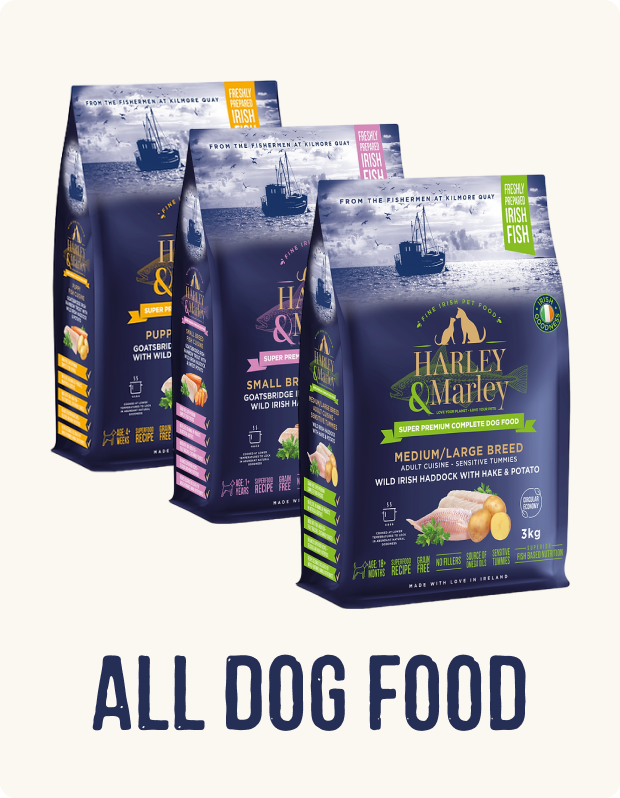
Harley & Marley: Medium/Large Breed Complete Food
Harley & Marley’s Medium/Large Breed Complete Food is a complete fish-based meal for medium and large dogs. If you’re considering rotation, it can provide a consistent option while you assess whether your dog benefits from changing foods. Choose according to your dog’s life stage: Harley & Marley also offers Puppy Complete Food, Small Breed Complete Food and Senior Dog Complete Food.
Keep your dog’s response central. Introduce changes gradually, monitor eating and stools, and keep a feeding diary of recipes and responses. A steady, suitable complete food can be a sensible choice when frequent variety doesn’t suit your dog’s routine.
Explore Harley & Marley’s complete dog food range at harleyandmarley.com.
Make your next food change a considered one
Weighing up the dog food rotation diet’s pros and cons is most useful when you know what you want to learn about your own dog. Before changing recipes, note your dog’s usual appetite, stools and behaviour. That gives you a baseline for judging whether the new routine suits them, instead of changing foods without a clear purpose.
Harley & Marley offers Medium/Large Breed Complete Food, Puppy Complete Food and Small Breed Complete Food. These complete-food options suit dogs of different sizes and life stages. Keep your dog’s needs at the centre, whether you maintain a familiar food or introduce variety thoughtfully.
If you’d like to explore suitable complete-food options for your dog, contact Harley & Marley. A steady, observant approach can help you make your next food decision with confidence.
Frequently Asked Questions
Does my dog need a break between proteins?
No, dogs don’t need a break between proteins as a rule. What matters is changing foods in a way your dog can tolerate, rather than leaving a gap between meals. For example, you can gradually replace a chicken-based complete food with a fish-based complete food. Make the transition steadily and note changes in appetite or stools so you can respond to your dog’s experience.
How can I switch to a new food without getting my dog sick?
Introduce the new food in small amounts alongside the familiar recipe, then increase it gradually. A sudden switch can upset digestion, so avoid changing the protein, texture and meal routine all at once. Keep water available, serve meals at the usual times and note any vomiting, loose stools or reluctance to eat. If your dog has a sensitive stomach or ongoing health concerns, seek veterinary guidance before changing their diet.
How do you switch proteins without wrecking the week?
Keep the week predictable by changing the protein gradually and holding the rest of the routine steady. For instance, don’t introduce a new food format or several new treats at the same time as a different protein. Prepare meals consistently and record what goes into each bowl. If your dog’s stools soften, stay at the current mix for two extra days before increasing the new recipe.
How do you track whether rotation is helping?
Use a simple feeding diary to compare your dog’s response to different recipes. Record the food, portion, appetite, stool quality, itching, ear symptoms and gas, along with the date each recipe begins. A monthly photograph taken in the same place can help you notice changes in coat or body condition. Look for patterns linked to a particular food, rather than judging the rotation from one meal.
How often should dog foods be switched?
Monthly changes or switching every few months provide a practical starting rhythm for adult dogs. Some owners rotate recipes more often, but rapid changes leave less time to assess tolerance and can unsettle digestion. Choose an interval you can maintain, and finish an opened bag before starting another when practical. Puppies need particular care: frequent changes can upset their stomachs as their digestive systems mature.
Isn’t changing my dog’s diet dangerous?
Changing food isn’t automatically dangerous, but an abrupt switch or unsuitable recipe can cause problems. Make changes gradually and choose complete food that fits your dog’s life stage and needs. Dogs with a history of food reactions, a sensitive stomach or a chronic condition need a more considered plan. Keep meals consistent during the transition, and contact your vet if concerning symptoms appear.
What are the genuine benefits?
A well-planned rotation can offer different flavours and textures, which may help keep meals interesting. Changing formats can also introduce higher-moisture food, one way to increase water intake. Proteins have distinct nutritional profiles, but variety alone doesn’t make a diet balanced. The practical benefit depends on choosing suitable complete foods and observing whether your dog eats and responds well.
What is a dog food rotation diet?
A dog food rotation diet is a planned approach to varying recipes, protein sources or food formats over time. For example, an owner might alternate between two complete dry recipes or gradually move between kibble and wet food. Each option should suit the dog’s age and needs. The aim is organised variety, not unpredictable switching or combining foods without considering whether they’re nutritionally complete.